NextGen Weather Watchers: Young Solomon Islanders Step into Public Service
This story was originally published by UNDP
The new year may just be another day for most, but for ten young Solomon Islanders, it’s when a new exciting chapter begins.
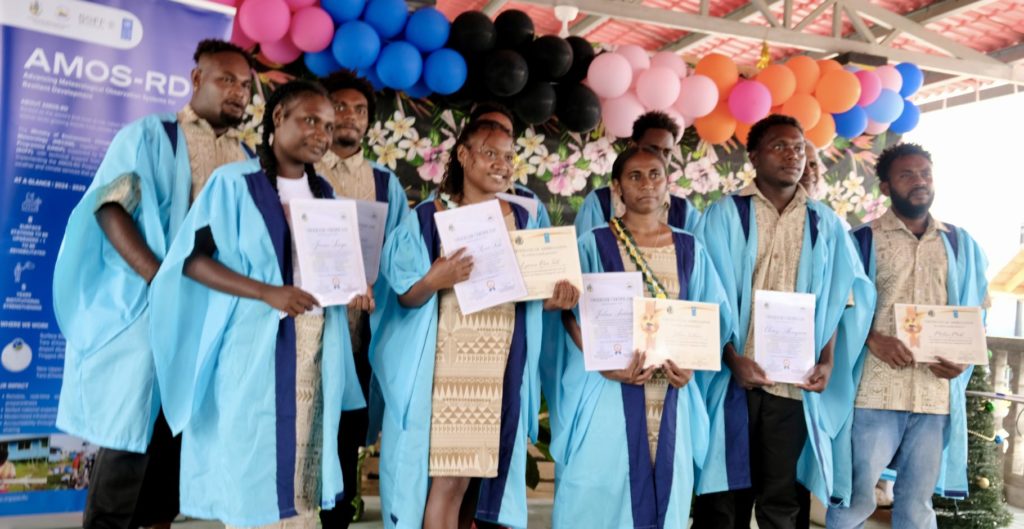
After completing a six-month Meteorological Observers Training Programme under the Solomon Islands Meteorological Service (SIMS), this group of early-career trainees has now earned their Class IV Meteorological Observers certification from the World Meteorological Organization (WMO).
They will soon be deployed across the country, supporting weather stations in key provincial locations which are being upgraded through the Advancing Meteorological Observation Systems for Resilient Development (AMOS-RD) project, funded by the Systematic Observations Financing Facility (SOFF) and implemented by the UN Development Programme (UNDP) in partnership with the Ministry of Environment, Climate Change, Disaster Management and Meteorology (MECDM).
More than a training milestone, their journey is also a story about access, opportunity, and belief in what young people can do when given the space to learn and serve.
Most of the trainees are fresh out of Year 12, aged between 18 and 24. What’s extraordinary about this programme is that it opens a doorway into science, public service, and purpose. In a country where jobs for young people are few, and migration is often the next step, these ten said yes to something rare — a local opportunity with national and global impact.
“I’m excited to be posted somewhere new,” said Lyvena, 20, one of the programme graduates now pursuing her bachelor’s degree. “I want to apply what I’ve learned and do something that matters.”
The shared responsibility to help collect and transmit vital meteorological data used for aviation safety, daily weather forecasts, disaster preparedness, early warning and climate monitoring is embedded in their work. It’s an effort that often goes unseen, but never unfelt, especially as the data they gather helps protect lives, property, and their future.
For SIMS, building a pipeline of skilled and passionate personnel has long been a priority. Since the 1980s, its Meteorological Observer Training Programme has served as an entry point for young Solomon Islanders into science-based public service. Now in its 18th cohort, the programme continues to shape capable professionals, each graduating class adding to the institutional strength of SIMS.
This steady growth doesn’t happen in isolation. Partnerships play a critical role in sustaining and scaling these efforts. Through the AMOS-RD project, this year’s observers were trained in a supportive learning environment, equipped with the necessary tools, and guided by ongoing mentorship from experienced officers.
Infrastructure upgrades form another part of the AMOS-RD Project. Eight surface weather stations are being upgraded to meet Global Basic Observing Network (GBON) standards (Taro in Choiseul Province, Munda in Western Province, Auki in Malaita Province, Honiara, Henderson, Tingoa in Rennell and Bellona, and Lata in Temotu), one is under rehabilitation (Kirakira), and three new upper-air stations will soon be built (Taro, Tulagi and Lata). Together, these changes reflect a strategic push toward future-ready systems, not only through advanced facilities, but by empowering the people who will run and sustain them.
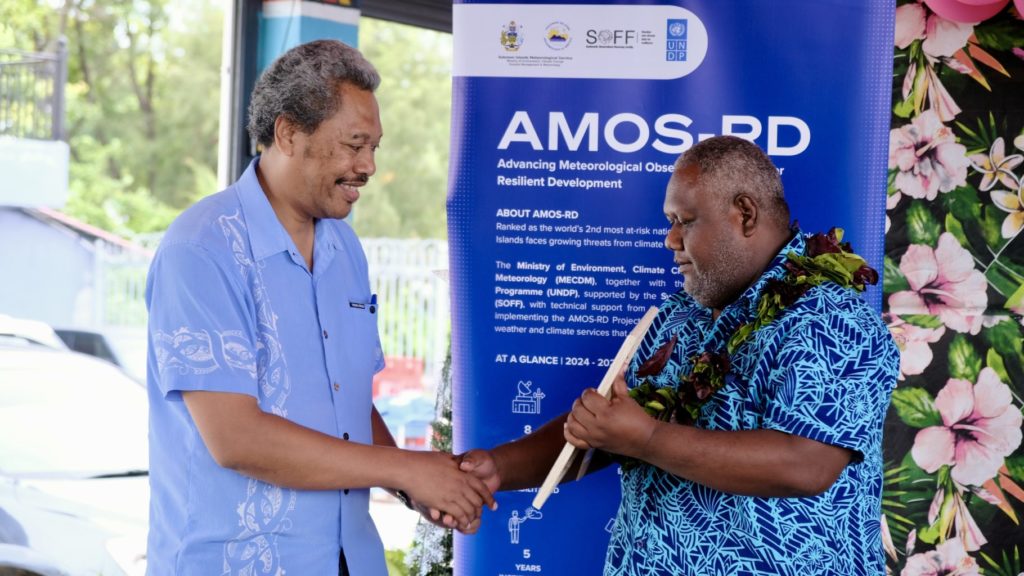
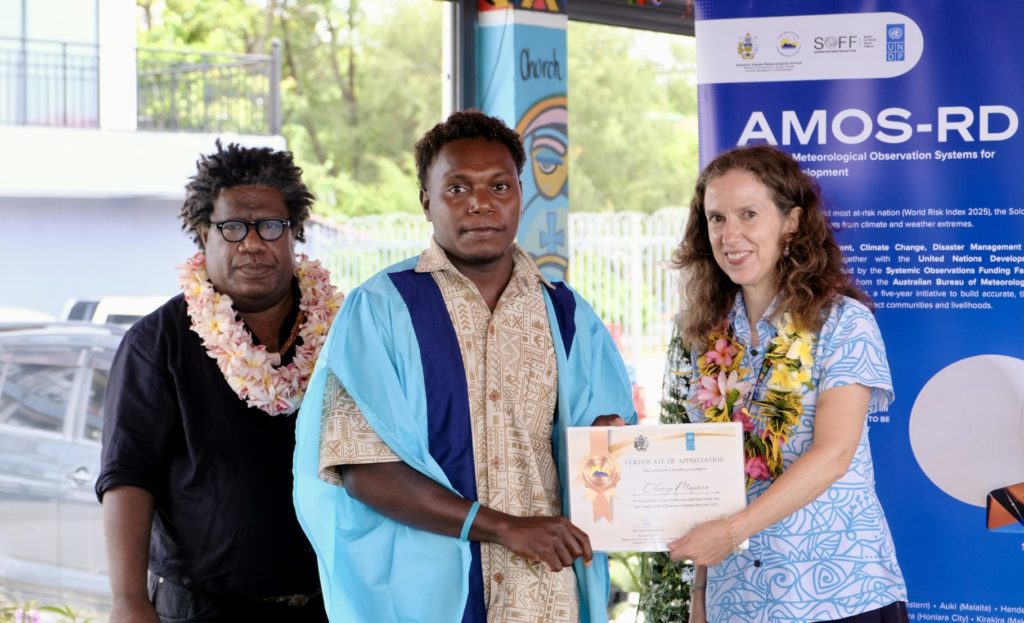
At the graduation ceremony in December, which was attended by high-level government officials including the Honourable MECDM Minister Polycarp Paea, UNDP in Solomon Islands Deputy Resident Representative Raluca Eddon, SIMS team, families, and friends, the graduates were reminded that this profession is no ordinary job. They were encouraged to remain faithful to their role, knowing that the data they help collect can save lives.
The event also recognized the renewal of SIMS’ Aviation Meteorological Service Certificate by the Civil Aviation Authority of Solomon Islands, a routine but significant endorsement of its continued compliance with international aviation standards. This reinforces the critical role of trained meteorological observers in ensuring aviation safety.
For UNDP and its partners, the AMOS-RD project reflects how development cooperation can support long-term systems strengthening. While projects operate within fixed timelines, their impact is measured by what endures: people who carry forward new skills, and institutions and communities that grow stronger and more ready to rise to the challenges ahead.
YOU MAY ALSO LIKE...


