COP31 recognized the importance of weather and climate observations. Will investment follow?
Five takeaways from SOFF at COP31
Antalya, Türkiye – At COP31, the Systematic Observations Financing Facility (SOFF) and its partners brought attention to the critical role of weather and climate observations in strengthening forecasts, early warnings and climate action worldwide. From new scientific evidence to country-led progress and emerging financing initiatives, SOFF highlighted the value of these observations and the urgent need to invest in them.
Here are five takeaways from SOFF’s participation at COP31.
1. The case for investing in observations gains political and scientific support
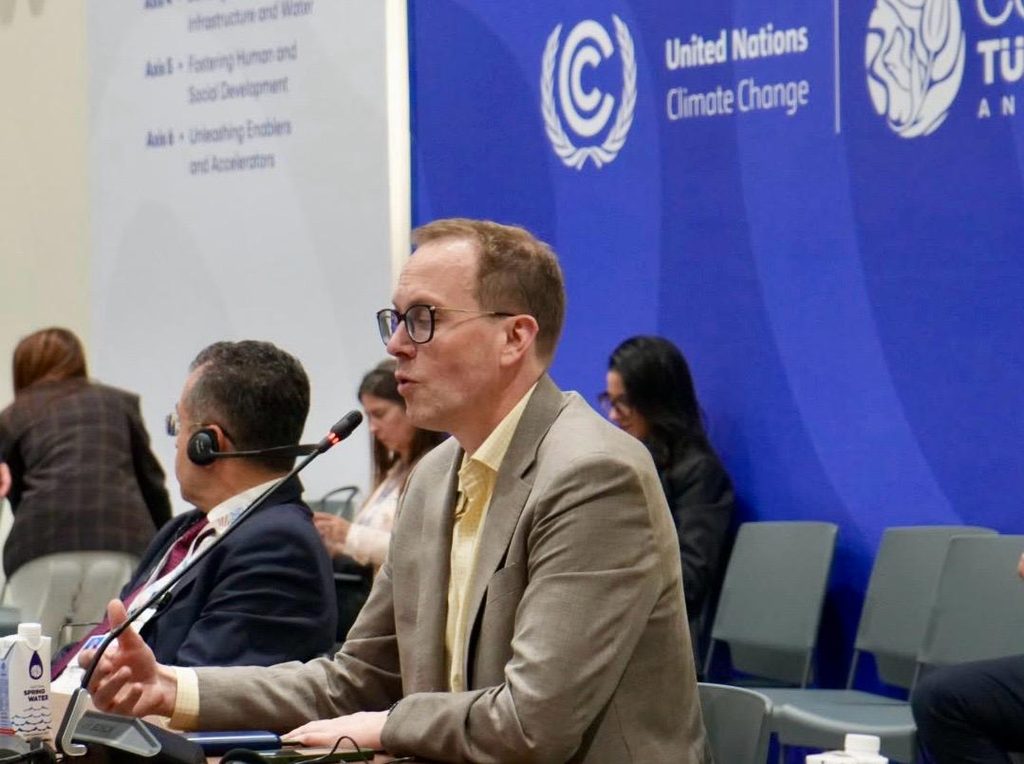
Closing weather and climate data gaps requires greater international cooperation and sustained financing. This was a central message brought at Earth Information Day by SOFF Secretariat Director, Markus Repnik, and Afaʻese Luteru Tauvale, from the Samoa Meteorological Service.
The importance of addressing weather and climate observation gaps also gained attention in the broader climate negotiations. Although COP31 ended without agreement on a cover decision, the draft text prepared under the Presidency consultations recognized that systematic observations underpin early warning systems and the assessment of collective progress towards the Paris Agreement’s temperature goal. It also expressed concern over threats to the continuity and sustainability of long-term observing networks and encouraged support to address persistent monitoring gaps in under-observed regions, including through SOFF.
The conclusions adopted by the Subsidiary Body for Scientific and Technological Advice (SBSTA) called for increased support to sustain observing networks and close persistent gaps, including through the Global Climate Observing System (GCOS) and the Global Ocean Observing System (GOOS). They also explicitly recognized SOFF’s contribution, acknowledged the financing gaps limiting its ability to respond to country requests and called for increased support to the Facility.
New scientific evidence presented at COP31 demonstrated why these investments matter. The European Centre for Medium-Range Weather Forecasts (ECMWF) presented findings from a two-year series of studies commissioned by SOFF, in coordination with WMO, examining the benefits of closing gaps in the Global Basic Observing Network (GBON).
These results show why closing observation gaps is a shared global interest: measurements from under-observed regions can disproportionately improve forecasts, even thousands of kilometres away. As ECMWF Director-General Florian Pappenberger explained:
“ECMWF gets every day 800 million observations. So you might quite reasonably ask, why do we actually need any more? Well, the answer is quite simple. […] An additional observation in a well-observed region doesn’t have the same impact as an observation which may be in a major blind spot.”
2. Countries are committed in closing observation gaps
Countries supported by SOFF took centre stage at COP31, showcasing their commitment and progress in strengthening their observing systems.
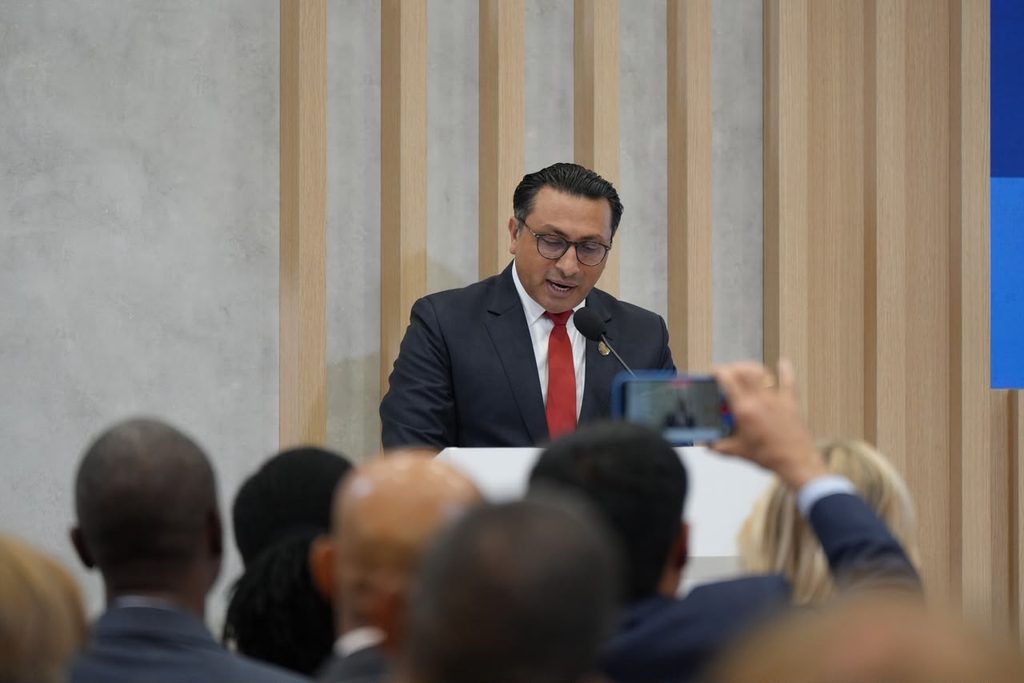
At ‘A Hotter World Is Flying Blind: Financing the Data that Protect People and Inform Investment’, jointly organized by SOFF and UNFCCC and moderated by Barbara Buchner – Global Managing Director of Climate Policy Initiative and one of TIME’s 100 Most Influential Climate Leaders – ministers from Rwanda, Cabo Verde and Nepal shared their countries’ experiences in strengthening weather and climate observations and called for continued support to close remaining gaps.
Drawing on Nepal’s devastating flash floods of 26 August 2026, Finance Minister Dr. Swarnim Wagle, also recognized among TIME’s 100 Most Influential Climate Leaders, highlighted how gaps in weather and climate data can limit access to disaster risk financing:
“No data, no trigger, no trigger, no parametric cover, no cover, no pre-arranged finance, or only the kind that arrives as debt. Costly debt.”
Rwanda’s Minister of Environment, Dr. Bernadette Arakwiye, highlighted the country’s progress in closing observation gaps, including the installation of its first automatic upper-air weather station, inaugurated in June 2026 with SOFF support. The station is the first of its kind
“Rwanda’s upper air station is an important milestone, but it must be the beginning of a much larger effort. Africa needs a denser, more sustainable network of observing stations, staffed by trained professionals and supported by strong regional and national institutions.”
The SOFF Action Report 2026: Delivering Data Justice, launched at COP31, documented progress across countries receiving SOFF support, including 26 countries implementing investments to strengthen their observations.
The importance of international cooperation and the role of SOFF Peer Advisors were also highlighted at the Spain Pavilion event, ‘From Climate Finance to Sustainable Meteorological Observations: Spain and SOFF in Action’. The discussion showcased how technical expertise and long-term partnerships help countries strengthen and sustain their national observing systems.
3. New financing approaches are taking shape, but the funding gap remains
At COP31 High-Level Segment, Sara Aagesen, Spain’s Third Vice-President and Minister for Ecological Transition and the Demographic Challenge, announced a new EUR 5 million contribution to SOFF, reaffirming Spain’s commitment as a pioneer funder.
However, 103 countries have requested SOFF support, including 12 with approved investment plans awaiting funding. Available resources remain insufficient to meet this demand.
Speaking at SOFF’s high-level event, Belgium’s Deputy Prime Minister Maxime Prévot called on governments and other partners to step up their support:
“Countries with the fewest resources should not be left to finance on their own infrastructure that benefits the entire world. My appeal today is very concrete. To governments: step up your financial contributions, and to businesses and philanthropic partners: join these efforts.”
WMO Secretary-General and SOFF Steering Committee Co-Chair Prof. Celeste Saulo also highlighted the importance of observations in informing investment decisions:
“No bank should finance a dam, a port, or a power plant without knowing the risks it will face. Observations are how we know what these risks are.”
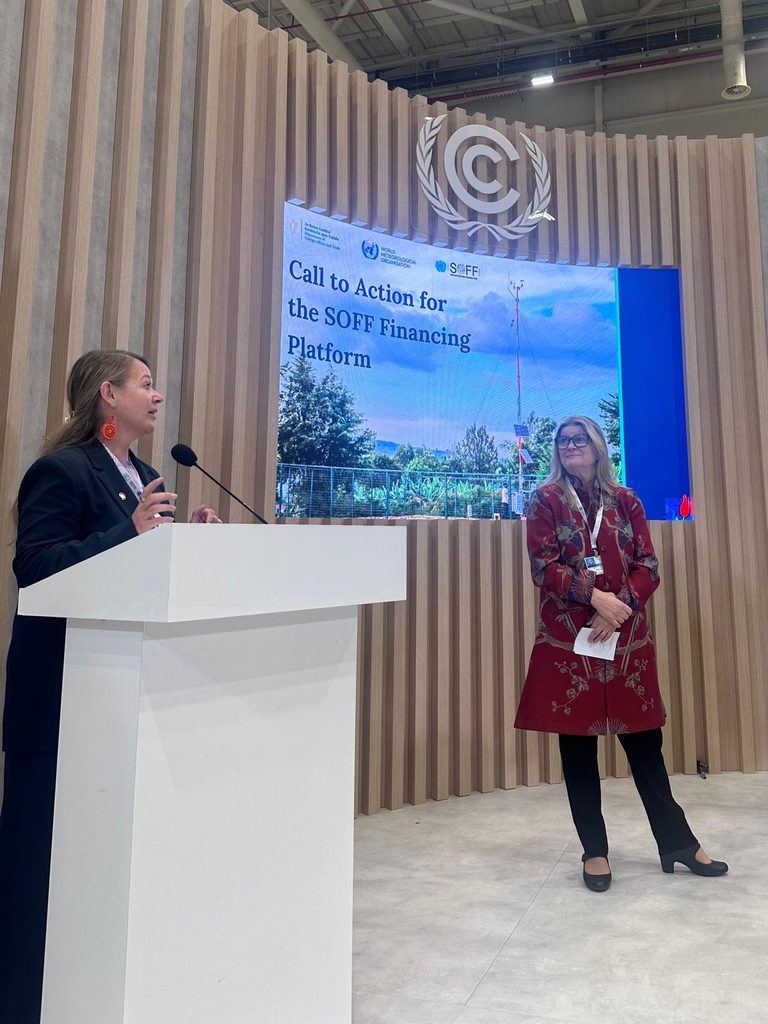
To mobilize additional financing, SOFF and Ireland introduced the SOFF Financing Platform, to be hosted in Dublin. Bringing together public, philanthropic and private finance, it aims to enable the issuance of Systematic Observation Impact Bonds to mobilize capital upfront while countries continue receiving grant-based support.
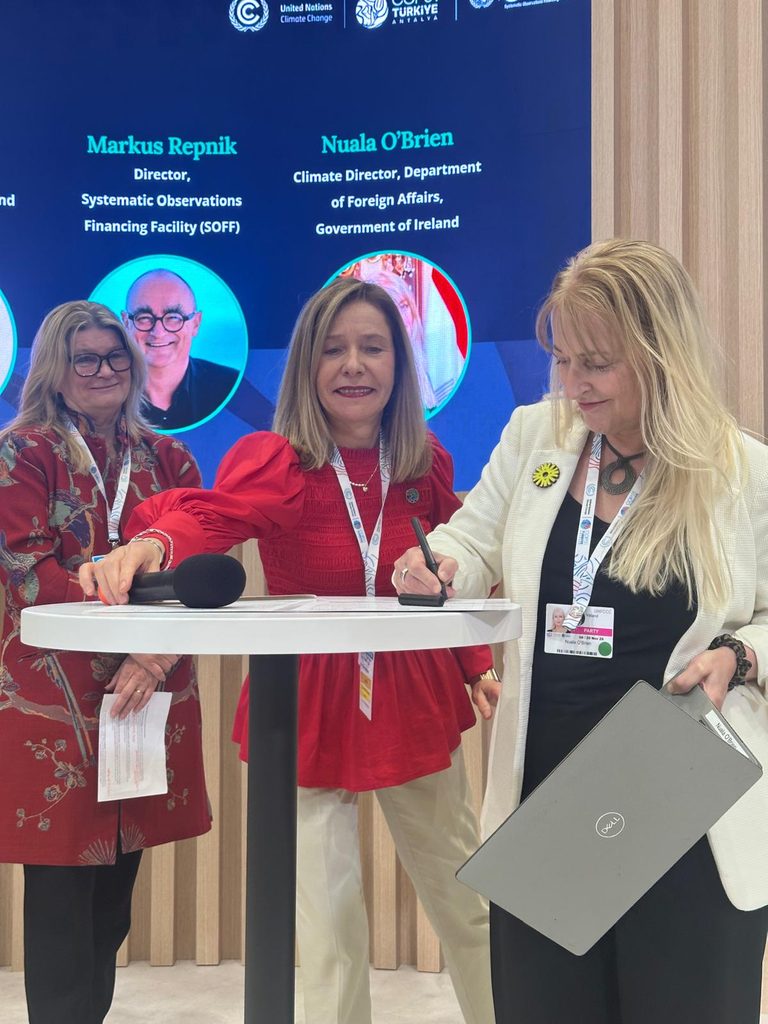
Ireland and WMO also issued a joint Call to Action, signed by Nuala O’Brien, Director of the Climate Unit at Ireland’s Department of Foreign Affairs and Trade, and WMO Secretary-General and SOFF Steering Committee Co-Chair, Prof. Celeste Saulo. The Call to Action invites governments and philanthropies to provide catalytic grants and mission-aligned investors to participate in the planned impact bonds, complementing sustained public investment.
4. Partnerships are expanding beyond the observation community
At COP31, SOFF and the Global Climate Observing System (GCOS) advanced an initiative bringing together organizations across science, policy, finance, industry and civil society to demonstrate the value of observations and mobilize sustained investment.
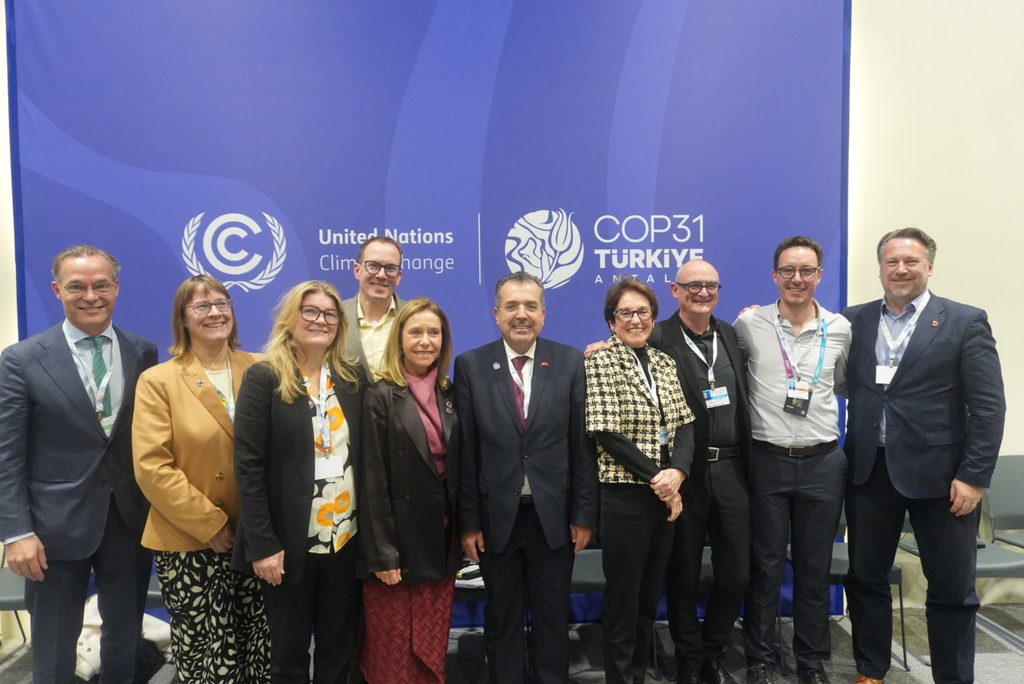
At ‘Global State of Systematic Weather and Climate Observation’ – organized with the COP31 Presidency, ECMWF, GCOS and Türkiye’s State Meteorological Service and moderated by Satu Santala, Managing Director of the Nordic Development Fund – representatives from the OECD, KPMG, E3G and the European Investment Bank explored the economic value of observations and the financing needed to sustain them.
Jaime de Bourbon de Parme, Environment Director at the Organisation for Economic Co-operation and Development (OECD), highlighted the economic returns of investing in observing systems and the need for governments to reflect these benefits in their investment decisions:
“This is a very concrete thing you can support, knowing it will make a direct impact for the Global North and the Global South at the same time.”
Will Bugler, Global Technical Lead for Climate Risk and Resilience at KPMG International, called for closer engagement between observation providers and data users to better demonstrate the value of observations for real-world decisions.
“There’s a real blind spot and a disconnect between the data that underpins decisions and the decisions being made. […] Yes, companies value the tools that they’re being provided by advisors to act on. But do they know the Earth observation data that underpin those tools? No, they do not.”
Nick Mabey, Director of E3G, emphasized the need to engage decision-makers beyond traditional scientific and development institutions, particularly those with a strategic interest in reliable weather and climate data:
“How do we get that strategic owner in some key governments, key institutions who actually understand the use cases you’ve just said, and have authority to make their institutions respond, internalize that value?”
This event brought attention to a Declaration on Sustaining the Global Climate Observing System, which calls for securing international coordination, protecting essential observing capabilities, and closing gaps while safeguarding climate data.
SOFF also strengthened its engagement with potential partners. A joint roundtable with the Asian Venture Philanthropy Network (AVPN) explored collaboration with philanthropies and impact investors. At the Global Sustainable Insurance Summit, convened by UNEP Finance Initiative and the Insurance Association of Türkiye, SOFF engaged insurers on the importance of observations for climate risk assessment.
5. Growing calls to close gaps in ocean observations
Ocean-based climate action, including marine observations, received greater attention at COP31.
Under the Global Basic Observing Network – the standard for mandatory real-time international data exchange of basic in-situ weather and climate observations – countries are expected to collect and internationally share essential measurements of atmospheric pressure and sea-surface temperature from their Exclusive Economic Zones. Yet WMO data from June 2026 showed that 81% of required marine observations were missing in Least Developed Countries, while 13 Pacific Small Island Developing States shared only around 7% of their requirements.
The conclusions adopted by SBSTA at COP31 also encouraged SOFF to consider expanding its activities in ocean observation and extending support to other developing countries, reinforcing calls made by Pacific leaders at COP31 and by the Pacific Meteorological Council in September.
Marine observations are already within SOFF’s mandate, but support is not yet operational. Extending it would require dedicated donor funding and approval by the SOFF Steering Committee.
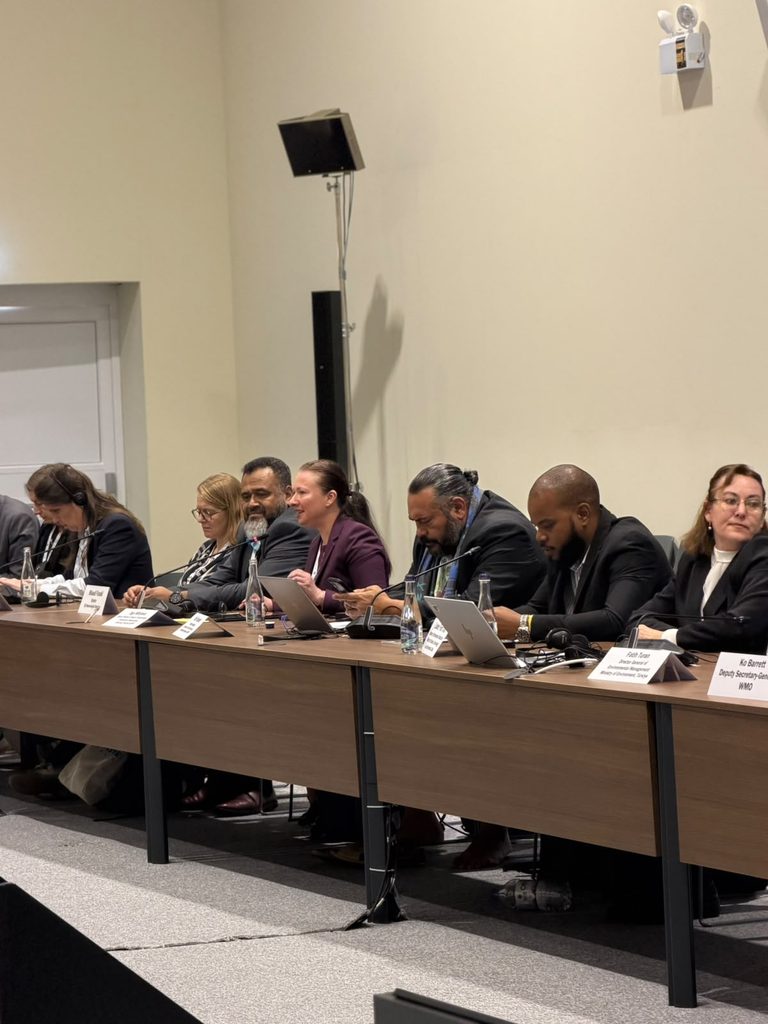
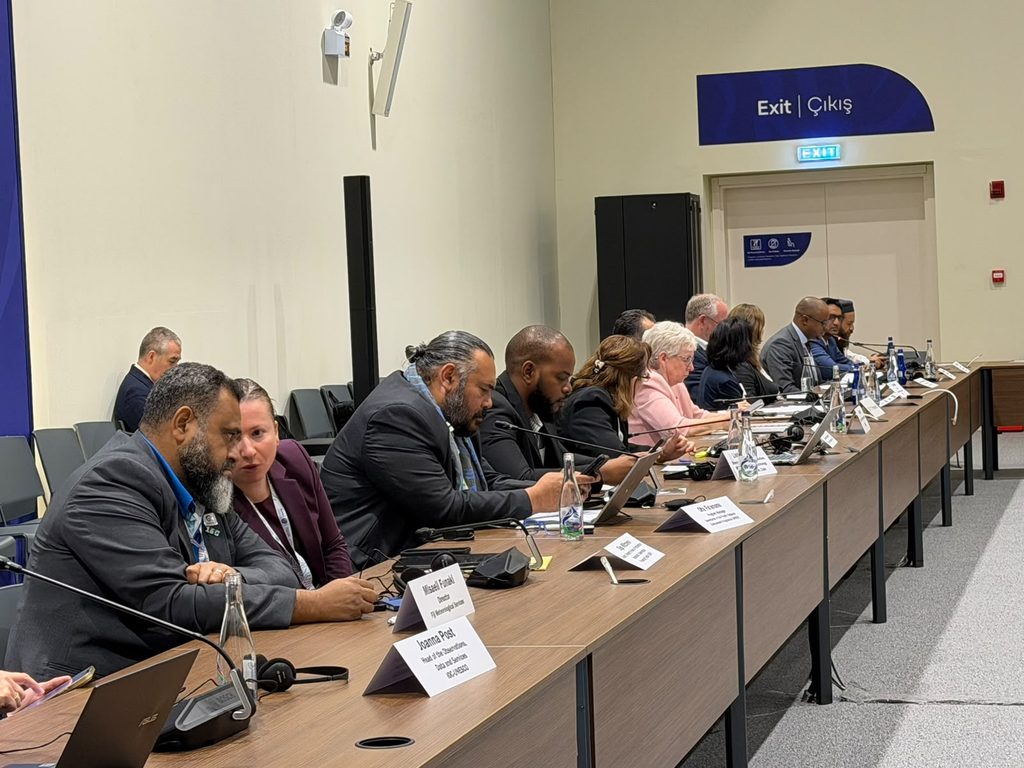
SOFF contributed to discussions on ocean observations at two COP31 events: the WMO-organized Coastal Infrastructure and Communities in a Changing Ocean and Weather Ready Pacific: From Last-Mile Delivery to Lasting Resilience, organized by SPREP, Weather Ready Pacific and the Pacific Meteorological Council.
What is needed now
As Markus Repnik, Director of the SOFF Secretariat, argues in his recent Nature World View article, a shift in mindset is needed. Financing surface and upper-air observations should not be seen as development assistance, but as investment in essential global infrastructure that delivers a global public good. Resources must be directed where observation where is needed most. Financing must also go beyond equipment to ensure that stations continue to generate and share reliable data over the long term.
COP31 demonstrated growing recognition of the value of systematic weather and climate observations. The challenge now is to translate that recognition into sustained investment. Countries are committed to delivering their share of data. It is in everyone’s interest to ensure they have the resources to do so.
More information about SOFF’s participation at COP31 is available here.
YOU MAY ALSO LIKE...